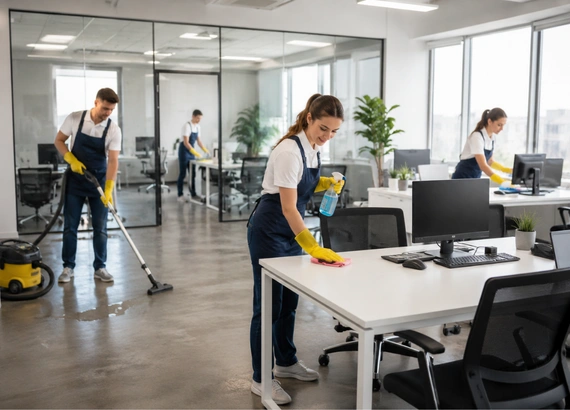
Keeping an office clean is important for creating a professional, comfortable, and productive workplace. However, every business has different cleaning needs depending on its size, number of employees, foot traffic, and daily activities. A small office may only need cleaning every one or two weeks, while a busy workplace may benefit from daily commercial cleaning services.
Choosing the right office cleaning schedule helps you maintain important areas without paying for more frequent cleaning than your workplace requires. In this guide, we’ll compare daily, weekly, fortnightly, and one-off office cleaning and explain which option may be the right fit for your workplace.
Why Regular Office Cleaning Matters
Regular office cleaning helps maintain a workplace that is clean, comfortable, and professional throughout the week. Instead of waiting for dirt, waste, and buildup to become noticeable, a consistent cleaning routine keeps important areas under control.
- Creates a Professional Impression: A clean reception and workspace can make a positive impression on clients, customers, and visitors.
- Supports Workplace Hygiene: Regular cleaning of bathrooms, kitchens, desks, and high-touch surfaces helps manage everyday dirt and buildup.
- Improves Employee Comfort: A clean and organised workplace provides a more pleasant environment for employees throughout the working day.
- Protects Office Surfaces: Regular care can help prevent dirt and grime from building up on carpets, floors, furniture, and other frequently used surfaces.
- Keeps Cleaning Manageable: A regular schedule spreads cleaning tasks over time, making it easier to maintain the office without waiting for a major clean.
What Factors Affect Your Office Cleaning Schedule?
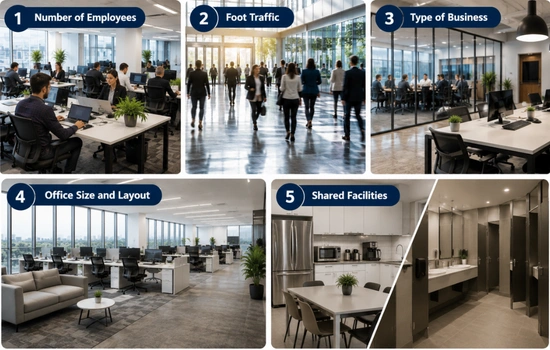
Not every office needs to be cleaned at the same frequency. The right schedule depends on how your workplace is used, how quickly dirt builds up, and how much cleaning is done between professional visits. Consider these key factors when choosing your office cleaning frequency.
1. Number of Employees
The more employees using an office, the faster dust, waste, and everyday mess can build up. Larger teams also use shared areas more frequently, which can increase the need for regular cleaning.
Best suited: Larger workplaces may benefit from daily cleaning, while smaller teams may be comfortable with weekly or fortnightly cleaning.
2. Foot Traffic
Busy entrances, reception areas, hallways, kitchens, and bathrooms usually collect dirt faster than quieter areas. Regular visitors and customers can also increase the amount of cleaning required.
Best suited: Offices with heavy foot traffic may need daily cleaning, while lower-traffic workplaces may require less frequent visits.
3. Type of Business
Your industry can have a major impact on cleaning requirements. Some workplaces have higher hygiene standards and need more frequent cleaning than a typical office.
For example, businesses that regularly serve customers or handle sensitive environments may need additional attention to bathrooms, shared surfaces, and high-touch areas.
4. Office Size and Layout
A larger office generally has more rooms, workstations, floors, and shared spaces to maintain. Open-plan offices can also experience more frequent use of shared areas.
Best suited: Larger or busy workplaces may benefit from daily or weekly cleaning, while smaller offices may be suitable for a weekly or fortnightly schedule.
5. Shared Facilities
Kitchens, bathrooms, meeting rooms, reception areas, and shared equipment can become dirty quickly because many people use them throughout the day.
These areas may need attention more frequently than private workspaces, particularly when they experience heavy daily use.
6. Cleaning Between Professional Visits
Your own cleaning routine also affects how often you need professional help. If employees regularly tidy their workstations, clean small spills, and keep shared areas organised, you may not need professional cleaning as often.
If very little cleaning is done between visits, weekly or daily professional cleaning may be more appropriate to prevent dirt and clutter from building up.
Choosing the Right Office Cleaning Schedule
The right cleaning frequency depends on how your office is used, how many people work there, and how quickly dirt and waste build up. Use the table below as a starting point, then choose the schedule that best matches your workplace needs.
| Cleaning Frequency | Best For | Main Benefit |
| Daily | Busy offices and high-traffic workplaces | Keeps the workplace consistently clean |
| Weekly | Small to medium-sized offices | Provides regular professional maintenance |
| Fortnightly | Smaller, low-traffic offices | Maintains cleanliness with fewer visits |
| One-Off | Special cleaning needs or specific occasions | Provides extra cleaning when you need it |
These options can be adjusted depending on your office size, employee numbers, foot traffic, business type, and shared facilities.
Daily Office Cleaning – Best for Busy Workplaces
Daily office cleaning is ideal for workplaces where employees, customers, or visitors use the space throughout the day. Frequent cleaning helps control dust, dirt, waste, and buildup before they become noticeable. It also keeps shared areas presentable and ready for the next working day.
1. High-Traffic Workplaces
Offices with busy entrances, reception areas, hallways, and shared spaces can collect dirt quickly. Daily cleaning helps keep these areas clean and welcoming.
2. Larger Teams
More employees generally means greater use of bathrooms, kitchens, workstations, and shared facilities. Daily cleaning can help manage the additional waste and everyday buildup.
3. Offices With Regular Visitors
If clients, customers, suppliers, or other visitors regularly enter your workplace, keeping reception areas, meeting rooms, and common spaces clean can help maintain a professional appearance.
4. Frequently Used Shared Areas
Kitchens, break rooms, bathrooms, meeting rooms, and shared equipment may need regular attention because multiple people use them throughout the day.
5. Workplaces With Higher Hygiene Needs
Some businesses require more frequent cleaning because of the nature of their operations. In these workplaces, daily attention to high-touch surfaces and shared areas can be especially important.
Daily cleaning may include: workstations, reception areas, kitchens, bathrooms, high-touch surfaces, bins, and high-traffic floors.
Weekly Office Cleaning – Ideal for Regular Maintenance
Weekly office cleaning is a practical option for small to medium-sized workplaces that need regular professional attention but do not require cleaning every day. It helps keep dust, dirt, waste, and general buildup under control while giving the office a consistent refresh each week.
1. Small to Medium-Sized Offices
Smaller teams may not generate enough daily traffic to require professional cleaning every day. A weekly visit can provide regular attention to the main areas of the workplace.
2. Moderate Foot Traffic
If your office has a steady but manageable amount of foot traffic, weekly cleaning can help maintain clean floors, work areas, kitchens, bathrooms, and shared spaces.
3. Offices With Basic Cleaning Between Visits
Weekly professional cleaning can work well when employees take care of simple tasks such as keeping desks tidy, cleaning up spills, and managing everyday clutter between visits.
4. Regularly Used Shared Areas
Kitchens, meeting rooms, bathrooms, reception areas, and other shared spaces can receive a thorough clean each week to prevent dirt and buildup from becoming difficult to manage.
5. Businesses Wanting Consistent Maintenance
A weekly schedule provides a reliable cleaning routine without the commitment of daily professional service. It can be a good balance for businesses that want their workplace regularly maintained.
Weekly cleaning may include: thorough vacuuming and mopping, dusting surfaces, cleaning bathrooms and kitchens, wiping shared areas, cleaning glass, and maintaining reception and meeting spaces.
Fortnightly Office Cleaning – A Flexible Option for Smaller Offices
Fortnightly office cleaning can be a good choice for smaller workplaces that do not have heavy daily traffic but still want regular professional cleaning. A two-week schedule gives you professional attention while allowing your team to manage basic tidying between visits.
1. Smaller Teams
Offices with fewer employees may not generate enough daily dirt and waste to require professional cleaning every day. Fortnightly visits can provide a practical level of ongoing maintenance.
2. Low to Moderate Foot Traffic
If your workplace has limited employee traffic and only occasional visitors, a fortnightly schedule may be enough to keep the main areas clean and presentable.
3. Regular Cleaning Between Visits
Fortnightly cleaning works best when employees take care of simple tasks such as clearing rubbish, wiping up spills, and keeping their individual work areas tidy between professional visits.
4. Limited Shared Facilities
Offices with fewer shared kitchens, meeting rooms, bathrooms, or communal spaces may be easier to maintain between professional cleaning visits.
5. Flexible Cleaning Needs
A fortnightly schedule can provide a balance between maintaining a professional workplace and keeping cleaning frequency suited to a smaller or less busy office.
Fortnightly cleaning may include: dusting, vacuuming, mopping, bathroom cleaning, kitchen cleaning, surface cleaning, rubbish removal, and attention to shared areas.
One-Off Commercial Cleaning – When You Need Extra Help
One-off commercial cleaning is useful when your workplace needs a detailed clean but does not require a regular daily, weekly, or fortnightly service. It can be booked for a specific occasion, after a period of heavy use, or when your office needs extra attention before an important event or change.
1. Before or After an Office Event
A one-off clean can help prepare meeting rooms, reception areas, kitchens, bathrooms, and other shared spaces before an event or restore them afterwards.
2. Moving Into or Out of an Office
If your business is relocating, a one-off clean can help prepare the new workspace before employees arrive or leave the previous property clean and ready for handover.
3. After Renovations or Building Work
Renovation and maintenance work can leave behind dust and debris. A detailed clean can help remove the remaining mess before the workspace is used again.
4. When Your Office Needs a Fresh Start
If regular cleaning has been missed or the workplace has accumulated noticeable dust and dirt, a one-off service can provide a thorough reset before returning to a regular cleaning routine.
5. Seasonal or Occasional Cleaning
A one-off clean can also be useful when certain areas need extra attention that is not covered by your normal cleaning schedule.
One-off cleaning may include: detailed dusting, vacuuming, mopping, kitchen and bathroom cleaning, surface cleaning, rubbish removal, and additional attention to areas that need a deeper refresh.
Signs Your Office Needs More Frequent Cleaning
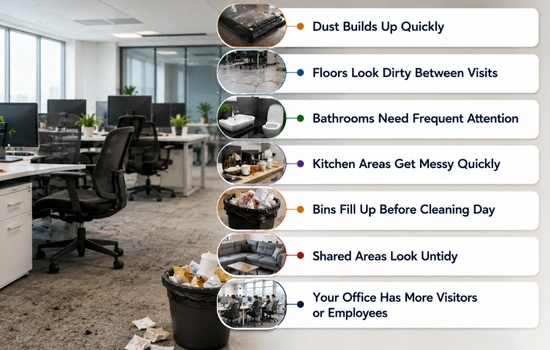
Your current cleaning schedule may not be enough if dirt, waste, and buildup become noticeable before the next professional visit. These signs can help you decide when your office may need more frequent cleaning.
- Dust Builds Up Quickly: If desks, shelves, windowsills, and other surfaces become dusty soon after cleaning, your office may need more frequent attention.
- Floors Look Dirty Between Visits: Visible dirt, footprints, or debris in entrances and high-traffic areas can indicate that your current schedule is not enough.
- Bathrooms Need Frequent Attention: Unpleasant odours, empty supplies, water marks, or visible buildup can be signs that bathrooms need more regular cleaning.
- Kitchen Areas Get Messy Quickly: Food crumbs, spills, waste, and dirty shared surfaces can build up quickly in busy break rooms and kitchens.
- Bins Fill Up Before Cleaning Day: Frequently overflowing bins or lingering rubbish can indicate that waste needs to be managed more often.
- Shared Areas Look Untidy: Meeting rooms, reception areas, and shared workspaces should remain presentable throughout the working week. If they quickly look neglected, consider increasing cleaning frequency.
- Your Office Has More Visitors or Employees: A change in team size, foot traffic, or business activity can increase cleaning requirements and may mean your existing schedule needs to be adjusted.
What Areas Are Covered in Office Cleaning?
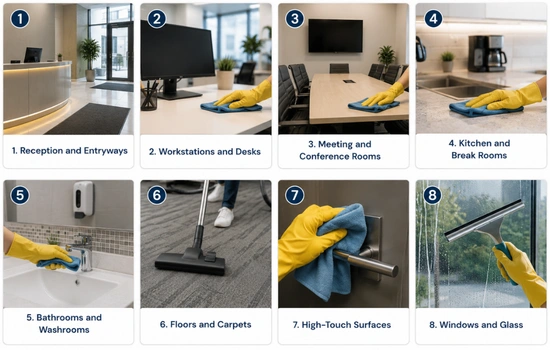
Different areas of an office have different cleaning needs. A professional office cleaning routine focuses on the spaces employees, clients, and visitors use most often, helping keep the workplace clean, comfortable, and presentable.
1. Reception and Entryways
Clean reception desks, entrance doors, waiting areas, floors, and other visible surfaces to create a welcoming first impression for clients and visitors.
2. Workstations and Desks
Dust and wipe desks, chairs, work surfaces, and other suitable areas. Shared workstations may need more frequent cleaning because they are used by multiple employees.
3. Meeting and Conference Rooms
Clean tables, chairs, floors, glass surfaces, and shared equipment to keep meeting spaces ready for employees, clients, and visitors.
4. Kitchen and Break Rooms
Clean countertops, sinks, taps, tables, appliances, floors, and other shared surfaces. Regular cleaning helps manage food residue, spills, waste, and everyday buildup.
5. Bathrooms and Washrooms
Clean and sanitise toilets, sinks, taps, mirrors, floors, dispensers, and other frequently used surfaces to maintain a comfortable and hygienic environment.
6. Floors and Carpets
Vacuum carpets and rugs and sweep or mop hard floors. High-traffic flooring may need more frequent attention to prevent dirt and debris from building up.
7. High-Touch Surfaces
Clean frequently handled areas such as door handles, light switches, phones, shared equipment, and other common touchpoints.
8. Windows and Glass
Clean accessible windows, glass doors, partitions, and mirrors to remove dust, fingerprints, and visible marks and keep the office looking well maintained.
Conclusion
There is no single cleaning frequency that works for every office. Daily, weekly, fortnightly, and one-off cleaning can each be suitable depending on your team size, foot traffic, business type, office layout, and how the workplace is maintained between visits. Choosing the right schedule helps keep your office clean and presentable without unnecessary cleaning.
If you are unsure which option is right for your workplace, Awesome Clean can help you choose a cleaning schedule based on your office and cleaning needs. From regular office maintenance to one-off commercial cleaning, our team can help keep your workplace fresh and professional. Get a Quote to discuss your commercial cleaning requirements.